Creature
Fire-drakes
One term used for fire-breathing Dragons in J.R.R. Tolkien's writings
There he lay, a vast red-golden dragon, fast asleep; a thrumming came from his jaws and nostrils, and wisps of smoke, but his fires were low in slumber. Beneath him, under all his limbs and his huge coiled tail, and about him on all sides stretching away across the unseen floors, lay countless piles of precious things, gold wrought and unwrought, gems and jewels, and silver red-stained in the ruddy light.
Fire-drakes (in Quenya Urulóki) was one term used for fire-breathing Dragons in J.R.R. Tolkien's writings. They may have been a sub-species.
First Age
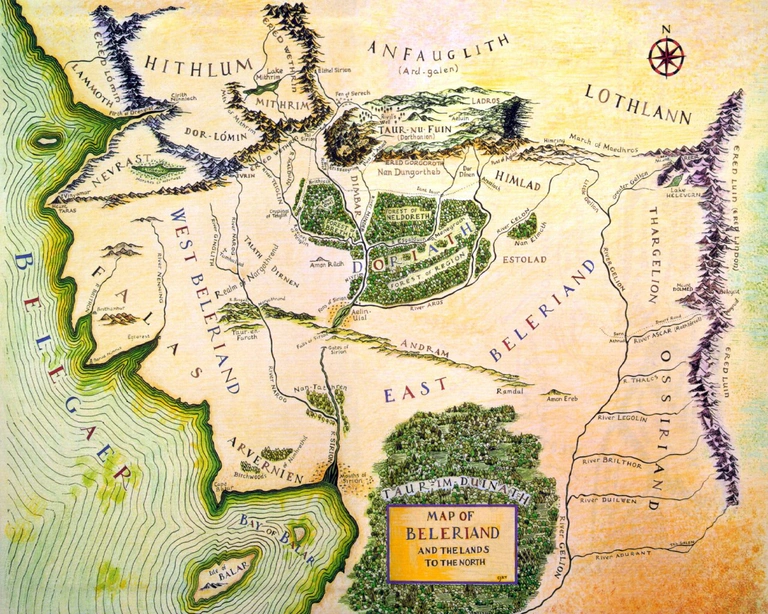
Glaurung was a fire-drake, and was the most famous of the breed. He was a key player in the sacking of Nargothrond and in the fulfillment of Morgoth's curse on the children of Húrin. He was a fearsome bane to the Elves.
Many fire-drakes also joined the Balrogs in the attack on Gondolin in the year 510. One of them arrived over the western walls of the city, bearing enemies to the assault upon their back. In the ensuing chaos, Ecthelion and Tuor were confronted by this dragon, and they were almost trampled. Tuor hewed its foot, at which the fire-drake was said to sprout flames and scream, lashing their tail and killing many Orcs and Elves. In this moment Tuor and Ecthelion were able to escape the beast. Another fire-drake dried up the Place of the Fountain.
Ancalagon and his fleet of winged dragons included many fire-drakes as they drove back the Host of Valinor during the War of Wrath at the end of the First Age, such was their incredible power.
Second and Third Ages
All but two of the winged dragons were thought to have been slain during the War of Wrath, and the surviving drakes eventually started to multiply in the far north. During the Second Age, they still posed threats to Men, and Sauron at one point summoned all of Morgoth's remaining forces, but the presence of dragons were not mentioned in the War of the Last Alliance. In TA 2770, Smaug came down from the North and sacked the Lonely Mountain. Later, in TA 2941, Thrór's grandson Thorin Oakenshield returned with a small group to reclaim his grandfather's kingdom, unleashing a chain of events that led to the death of Smaug when he attacked nearby Lake-town and was slain by the Black Arrow shot by Bard the Bowman.

According to Gandalf, there were still dragons shortly prior to the War of the Ring, though they were said to be lesser in nature.
Description
Fire-drakes often grew to immense sizes, and breathed destructive flames and vapours from their mouths and nostrils. The fire from one of these dragons was so intense that it was said to be able to consume and melt the Rings of Power (as became the case with some of the Dwarven Rings), with the exception of the One Ring. The fire also emitted extreme heats from their bodies, enabling them to dry up a river and potentially melt their passage through snow.
Most of the famous dragons throughout the ages were fire-drakes, although only some of them fought for Morgoth.
Tolkien confirmed in a letter that Smaug was the last of his kind, the last of the "great" fire-drakes of Middle-earth. Dragons of lesser stature, such as smaller kin of Cold-drakes and fire-drakes lived on. This was also mentioned by Gandalf.
The Hobbit film trilogy
In The Hobbit: The Desolation of Smaug, Thranduil had claimed to face a "fire drake of the North", and presumably suffered damages caused by dragon's fire. It is unknown whether this dragon was in the First Age, or those in the Grey Mountains in later days, but seemingly in the Third Age after Smaug's attack on the Lonely Mountain.
Sources
Adapted from the original article, under CC BY-SA 3.0.