Creature
Balrogs
The Balrogs, or Valaraukar (singular Valarauko, Quenya for "Demon of power")…
Then something came into the chamber - I felt it through the door, and the Orcs themselves were afraid and fell silent. It laid hold of the iron ring, and then it perceived me and my spell.
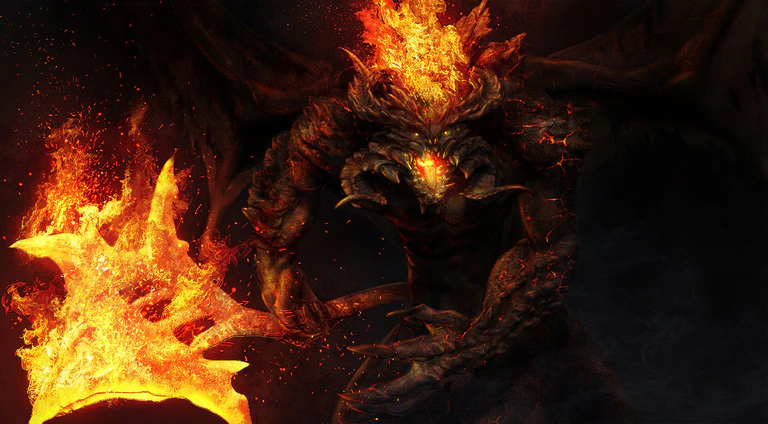
The Balrogs, or Valaraukar (singular Valarauko, Quenya for "Demon of power"), were three to seven Maiar seduced and corrupted by Morgoth into betraying the Valar and serving him, turning into dreadful Úmaiar and scourges of fire cloaked in shadow. They were counted amongst Morgoth's most powerful and fearsome servants.
History
Originally, the Balrogs were Maiar who were persuaded by Melkor's might and splendor to betray the Valar and join his cause and corrupted by him into Úmaiar. Their first dwelling was in Utumno, the great fortress of the Iron Mountains, but after their master's defeat during the Battle of the Powers, the Balrogs and other creatures in Melkor's service escaped to Angband and hibernated there.
First Age
Years of the Trees

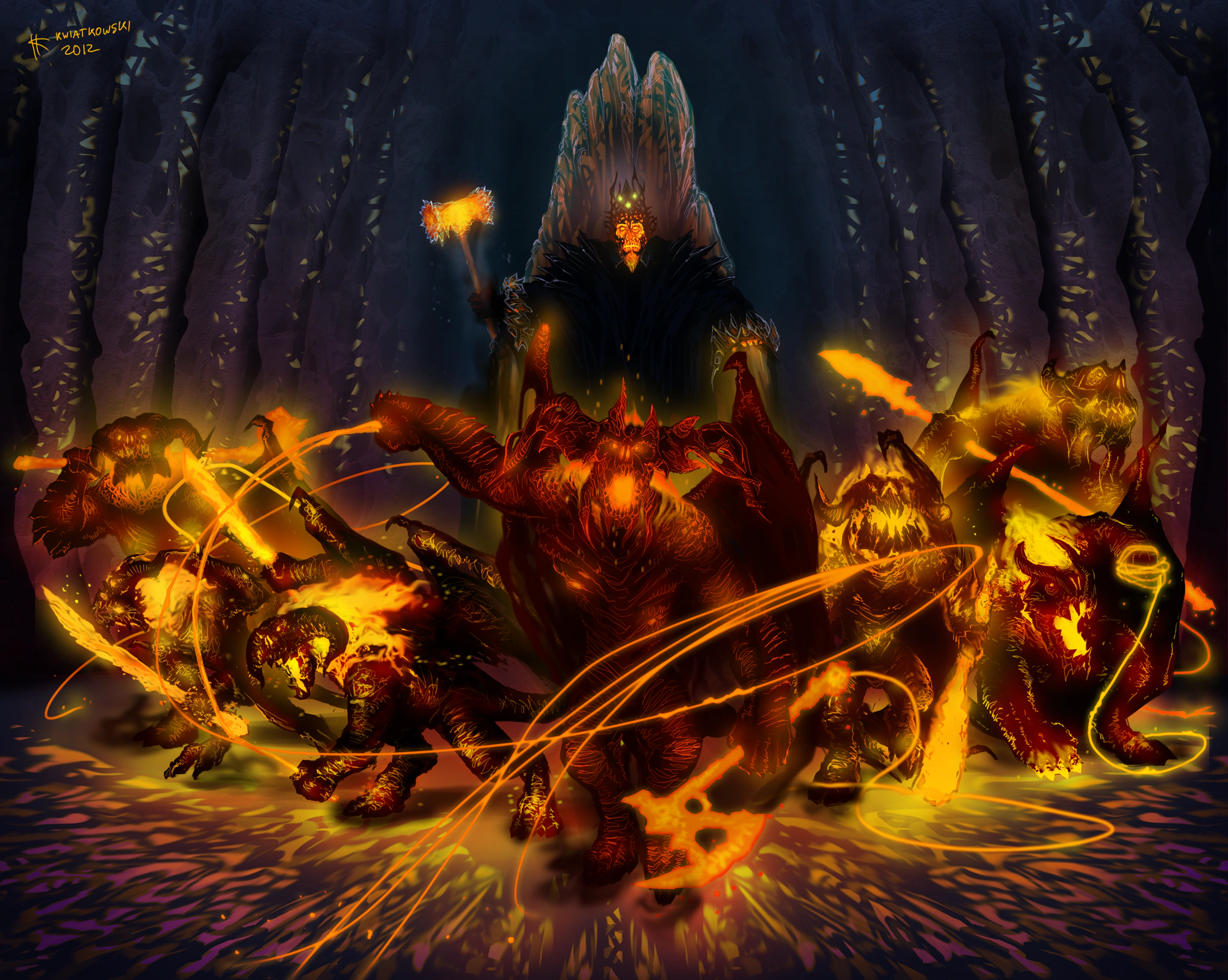
The Balrogs were present as early as the Years of the Trees when Melkor and Ungoliant destroyed the Two Trees of Valinor. By then, the Balrogs remained in the pits of Angband. After Melkor (now named Morgoth) fled Valinor with Ungoliant, he came to Lammoth near the ruins of Angband to renew his rule in Middle-earth. A disagreement with Ungoliant led to her attacking him, and Morgoth gave out a great cry that roused the Balrogs from their slumber. In a tempest of fire, they came and drove Ungoliant away, prepared to pursue her. However, they were halted by Morgoth and returned to Angband, which shortly thereafter was constructed anew.
Years of the Sun
When the Ñoldor won the battle Dagor-nuin-Giliath, Fëanor and a small vanguard pursued the remnants of the Orc army that had attacked them. The Elven troop came within sight of Angband, but the Orcs, who had by this point noted the small size of Fëanor's force, turned and gave battle. As the engagement had occurred so close to Angband, a number of Balrogs emerged to aid the Orcs, and they quickly slew most of the Elves. Fëanor was left to fight on alone, and for a long while he did so, despite being wounded many times. But at last Gothmog, the first Lord of Balrogs, struck Fëanor to the ground. A relief force led by Fëanor's sons soon arrived and prevented their father from being slain on the battlefield. The Balrogs returned to Angbad, and Fëanor died shortly thereafter of his wounds.
Maedhros, Fëanor's son, persuaded the forces of Morgoth for a feigned treaty, but Morgoth sent the Balrogs. The entire company was slain, except for Maedhros, who was taken to Angband.

The next time the Balrogs were recorded as having fought was during Dagor Bragollach over four hundred years later. They, along with the Dragon Glaurung and an army of Orcs and other monsters, issued forth from Angband and badly mauled the kingdoms of the Elves and Edain. According to one account, Morgoth's chief agent, Sauron, led a "host of Balrogs" to conquer the Elvish isle of Tol Sirion in the battle's aftermath.
The Balrogs fought in the Nírnaeth Arnoediad, where Gothmog led one of Morgoth's two hosts. He was evidently present in the host that attacked and defeated Maedhros and his armies, for he arrived to fight the forces of Fingon and Turgon on the fourth day of the battle when Morgoth's eastern host arrived from defeating Maedhros. He threw aside Húrin and Turgon, turned upon Fingon and killed him with the help of the second Balrog-lord named Lungorthin, securing the field for Morgoth's forces. He also captured Húrin, after Húrin was buried under a mountain of slain foes. He bound the human warrior and delivered him to Angband, whereupon Morgoth attempted unsuccessfully to pry the location of Gondolin from him, even despite torture by Lungorthin.
In FA 510, on the day of the Fall of Gondolin, the Balrogs rode upon the backs of dragons to reach the hidden city. The Lord of the House of the Fountain, Ecthelion, managed to kill Gothmog at the cost of his own life. While attempting to escape the burning city, Glorfindel and his companions were blocked by a Balrog. To save Tuor, Idril and their young son Eärendil, Glorfindel fought the Balrog on a cliff and cast it down, but he was pulled down with it to their deaths.
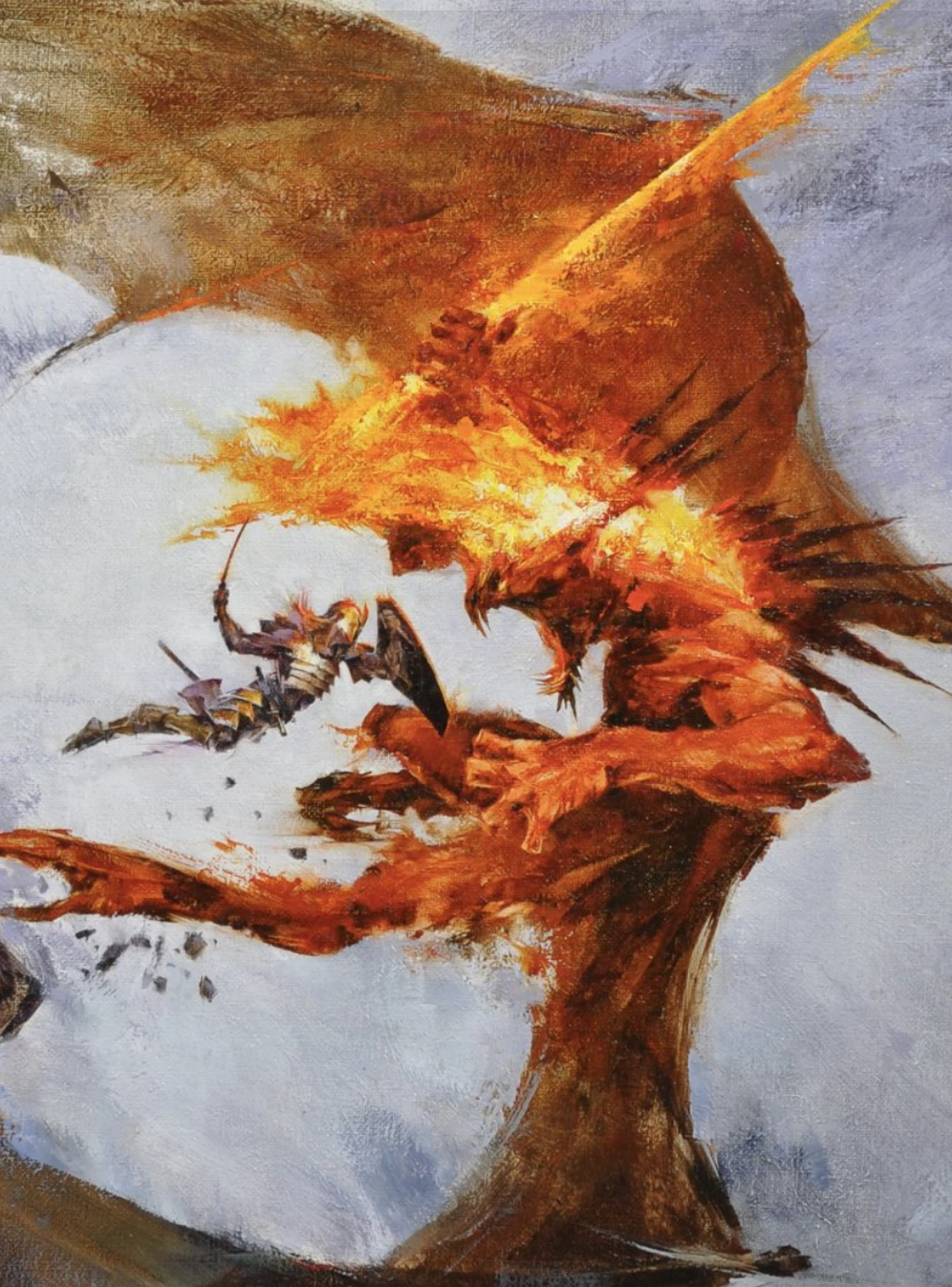
The remaining Balrogs fought in the War of Wrath. While most were destroyed along with most of Morgoth's army, at least one managed to escape and hide in deep caverns far away.
Second Age
After returning in the Second Age, Morgoth's lieutenant and greatest servant Sauron gathered "all the evil things of the days of Morgoth that remained on earth and beneath it," starting the Accursed Years; however, no Balrogs are explicitly mentioned as being active at this time.
Third Age
In TA 1980, the Balrog who fled the War of Wrath awoke beneath Khazad-dûm, roused by the Dwarves' mining for mithril or "by the malice of Sauron". It drove the Dwarves out of their home and slew the king at the time, Durin VI; this Balrog was thereafter called "Durin's Bane". Its presence made way for Sauron's creatures to infest the mines, while preventing Durin's Folk from reclaiming Moria.
During the War of the Ring, the Fellowship of the Ring passed through Moria and encountered Durin's Bane, which pursued them to the Bridge of Khazad-dûm. Gandalf the Grey fought the Balrog, allowing the Fellowship to escape Moria. Both fell into the abyss, but the battle continued at the peak of Zirakzigil. The duel between the two Ainur ended with the Balrog's death. While Gandalf also died, he was later "sent back" by the Valar, as Gandalf the White.
Known Balrogs
Gothmog - the first Lord of the Balrogs and High-captain of Angband; slain by Ecthelion during the Fall of Gondolin.
Lungorthin - the second Lord of Balrogs and Gothmog's right-hand; died at some point before or during the War of Wrath.
Durin's Bane - awakened in the Third Age below Moria; slain by Gandalf at the peak of Zirakzigil.
Appearance
It was like a great shadow, in the middle of which was a dark form, of man-shape maybe, yet greater; and a power and terror seemed to be in it and to go before it.
The Balrogs generally had the form of menacing beings roughly humanoid in shape, at least twice the height or stature of Men and Elves, and seemed to consist of or be surrounded by black smoke and flame. Durin's Bane in particular was known to have entered into the Chamber of Mazarbul, and so would have needed to be of a size that could fit in some manner through the Chamber's door. Additionally, Balrogs have hearts of fire, red tongues, yellow eyes that glowed like furnaces, and very long arms tipped with steel claws. They had hair described as streaming manes that could catch fire, kindling a blaze behind them.

It is disputed whether or not the Balrogs had wings, but Tolkien's only allusion to wings is that, in The Fellowship of the Ring, dark shadows "like two vast wings" appeared behind Durin's Bane at the Bridge of Khazad-dûm. Durin's Bane, and the two Balrogs at the Fall of Gondolin each fell helplessly down from high places with no aerial recovery.
Powers & abilities
The Balrogs were exceptionally powerful creatures. It took at least three or at most seven Balrogs to drive away the empowered Ungoliant, an entity so mighty that she was able to contend with Morgoth himself.
The most notable weapon that Balrogs wielded were whips of flame that whistled with many thongs, and they were attired with helms and armor made of iron. Gothmog, the Lord of Balrogs in the First Age, used a great black axe in battle. Dúrin's Bane possessed a fiery molten sword, a blade shaped like a stabbing tongue of fire. In the Fall of Gondolin, Balrogs were armed with bows and slings that shot or loosed an unceasing number of fiery bolts, darts of fire or flaming arrows shaped like small snakes. They may also have been armed with maces in the Nírnaeth Arnoediad.
Durin's Bane managed to expel the Dwarves of Khazad-dûm from their ancient and supremely fortified home, which was the greatest kingdom of Dwarves that had ever been. He also contended with the wizard Gandalf, and each killed the other.
Balrogs also projected an aura of supernatural terror, so much so that even their own allies were frightened of them.
Some Balrogs were evidently capable of sorcery, as Durin's Bane was said by Gandalf to have used a counterspell against him, after Gandalf had attempted to magically seal the doors of the Chamber of Mazarbul.
The Balrogs were fast and agile, able to leap or run vast distances in a short span of time. Their passing is once even described as a "tempest of fire."
Gothmog fought against and overcame Fëanor, an Elf who was considered the mightiest of the Children of Ilúvatar. Another, in the same battle, also spread chaos through Gondolin, a city filled with Elves of great power.
Background
In Tolkien's later writings, he noted that there were no more than three or seven Balrogs.
In an early draft, there was a Lord of Balrogs named Lungorthin. According to Christopher Tolkien, it is likely that Lungorthin is not another name for Gothmog, as the name Gothmog was mentioned in the earliest Middle-earth writings, as well as the final version of Tolkien's mythology.
Initially, the Balrogs were far less menacing in size, while being described as immense in numbers:
In later writings, however, Christopher Tolkien notes that:

In adaptations
The Balrog is a final boss in the 1994 SNES game J.R.R. Tolkien's The Lord of the Rings, Volume 1, whom the player must defeat before exiting the Mines of Moria and to the end of the game.
The Balrog is a boss character in The Lord of the Rings: The Fellowship of the Ring and The Lord of the Rings: The Two Towers video games, on Game Boy Advance, and The Lord of the Rings: The Third Age. In the latter, the Balrog is fought by Gandalf on the player's side and becomes a usable hero for the duration of the battle.
In the video games The Lord of the Rings: The Battle for Middle-earth and The Lord of the Rings: The Battle for Middle-earth II, the Balrog is summonable as a Power option of the Goblin faction and Mordor, costing 25 power-points. The Balrog's appearance and abilities directly reference the rendition of Durin's Bane in the films.
The Balrog appears in The Lord of the Rings: Aragorn's Quest, resembling the movie version.
Two Balrogs appear in The Lord of the Rings Online: Thaurlach, located deep within the Rift of Nurz Ghashu in Angmar, and Durin's Bane, encountered several times in visions and flashback sequences, first during introduction "quests" to Moria. Its remains are located at Moria's peak. An illusion of Durin's Bane is encountered in the Ost Dunhoth Instance Raid, and the true version is encountered in The Fall of Khazad-dûm, another Instance Raid.
In LEGO The Lord of the Rings: The Video Game, players can play as Gandalf and fight the Balrog. The Balrog is also an enemy in LEGO Dimensions.
The Balrog is a playable hero in The Lord of the Rings: Conquest, in Mission 4 - The Mines of Moria and Mission 7- The Shire (Evil Campaign).
A Balrog named Tar Goroth appears in the game Middle-earth: Shadow of War as a boss. He is fought in multiple stages, and meets his end frozen in a lake by Carnán. Though he is almost resurrected by the Uruk necromancer Zog, Talion and Celebrimbor manage to stop him.
"The Balrog" is a computer-controlled character in MUME ("Multi-Users in Middle-earth") residing in Khazad-dûm. Currently, it is the toughest foe in the game, and players that beat it can loot the greatest spoils available.
Sources
Adapted from the original article, under CC BY-SA 3.0.