Thing
Mithril
Mithril was a precious, silvery metal, very lightweight but immensely strong…
Mithril was a precious, silvery metal, very lightweight but immensely strong, that was discovered by the Dwarves.
Description
The wizard Gandalf explained mithril to the Fellowship of the Ring in TA 3019: "The wealth of the Dwarves was not in gold or jewels, the silver of the Dwarves; nor in iron for its worth was more than that of gold, and now it is beyond price; for little is left above ground, and even the Orcs dare not delve here for it." ... "Mithril! All folk desired it. It could be beaten like copper, and polished like glass; and the Dwarves could make of it a metal, light and yet harder than tempered steel. Its beauty was like to that of common silver, but the beauty of Mithril did not tarnish or grow dim. "
Mithril in its pure form was rather soft and malleable. It could be used in various alloys to produce extremely lightweight, hard and durable armor. It was also used as a type of inlay called ithildin. The Elves loved it for its beauty and presumably used it for jewelry and attire rather than weapons or armor.
History
Mithril was extremely rare by the end of the Third Age. The Dwarves mined for mithril "too greedily and too deep", ultimately releasing a Balrog, Durin's Bane. Once it destroyed the kingdom of the Dwarves at Khazad-dûm, Middle-earth's only source of new mithril ore was cut off.
Before the Dwarves fled, mithril was worth ten times its own volume in gold. However after the Dwarves had fled, the excavation of mithril ore stopped entirely, it became priceless, as the presence of the Balrog prevented the Orcs there from mining for it. The only way to obtain a mithril object at the end of the Third Age was to either use heirloom mithril weapons and armor that were produced, or to melt down objects to forge new ones. However, most of the mithril produced by the Dwarves was gathered by Orcs and paid as tribute to Sauron, who was said to covet it.
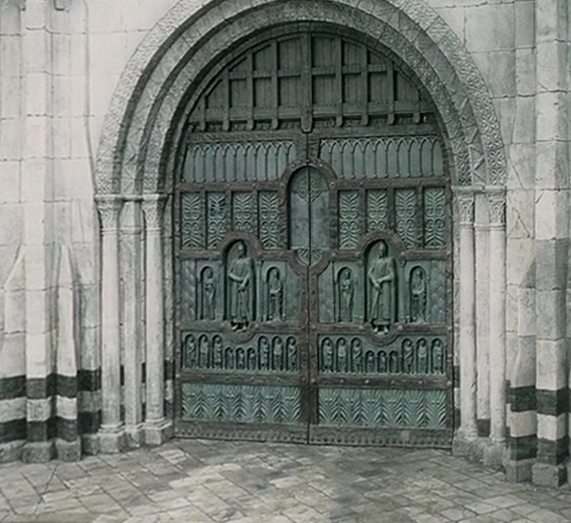
The helmets of the Guard of the Citadel were made of mithril, heirlooms of Gondor's past wealth. After the War of the Ring, Minas Tirith's Great Gate was rebuilt by the Dwarves out of mithril and steel.
The mithril coat
Of all items made of mithril, the most famous was the "small shirt of mail" retrieved from the hoard of the dragon Smaug, and given to Bilbo Baggins by Thorin Oakenshield. "It was close-woven of many rings, as supple almost as linen, cold as ice, and harder than steel..." and studded with white gems of unknown variety.

Other mentions
Galadriel possessed one of the three Elven Rings, Nenya. It was wrought of mithril with a white stone.
The Short Lay of Eärendel: Eärendillinwë by Bilbo Baggins says the Powers of Aman built Eärendil's ship “of mithril and of elven-glass”.
Searching Orthanc, King Elessar and his aides found the long lost Elendilmir, a white star of Elvish crystal affixed to a fillet of mithril. Once owned by Elendil, the first King of Arnor and High King of the Realms in Exile, it was an emblem of royalty in the North Kingdom.
The Guards of the Citadel of Minas Tirith wore helmets of mithril, "heirlooms from the glory of old days."
As Aragorn's ships sailed up the Anduin to relieve the besieged Minas Tirith during the War of the Ring, the standard flying on his ship shows a crown made of mithril and gold.
After Gimli became Lord of the Glittering Caves, he and his Dwarves forged great gates of mithril to replace the gates of Minas Tirith which were broken by the Witch-king of Angmar during the Siege of Gondor.
Other precious metals and minerals
Gold
Silver
Textual
In the Hervarar saga, which was a cycle dealing with the magic sword Tyrfing (and from which Tolkien borrowed, for instance, the names Dwalin and Durin), the hero Orvar-Odd wore a silken mailcoat which nothing could pierce (Oddr svarar: "ek vil berjask við Angantýr, hann mun gefa stór högg með Tyrfingi, en ek trúi betr skyrtu minni, enn brynju þinni, til hlífðar").
Contemporary
For the literal-minded reader, it is unclear whether or not mithril is a real metal; many have thought it to be platinum or iridium, however, both are far too heavy to qualify as candidates. It is possible that this legendary material was modeled after titanium, as this metal, while actually quite abundant as ore, was very expensive to produce in its metallic form (especially by medieval technology), and has some of mithril's properties of strength, bright silvery color, corrosion resistance, and light weight. Other possibilities are aluminium, or magnesium; these metals are even lighter than titanium, but not as strong or as silvery and shiny (famously, Napoleon III of France once bought dinnerware made out of aluminium because it was more expensive than gold at the time). J.R.R. Tolkien, being highly educated, would probably have had knowledge of these three metals and the difficulty in preparing them.
Peter Jackson's The Lord of the Rings trilogy

Here's a pretty thing... light as a feather, and hard as dragon's scales.
In Peter Jackson's film adaptation of The Fellowship of the Ring, Frodo was stabbed by a boar spear wielded by a Cave-troll rather than an Orc-chieftain.
While it is never explicitly stated where the mithril shirt originally came from, in the extended edition, Gandalf tells the Fellowship that Bilbo had a set of mithril rings given to him by Thorin. Gimli states that it was a kingly gift and Gandalf agrees but admits he never told Bilbo exactly how valuable the rings were.
Peter Jackson's The Hobbit trilogy
In The Hobbit: The Battle of the Five Armies, Thorin gives Bilbo the mithril vest while the Dwarves are arming themselves for the upcoming battle, stating that it is a gift and a token of their friendship. Thorin states that it is made of silver-steel but does not mention its value or rarity.
The Lord of the Rings: The Rings of Power
In the first season of The Lord of the Rings: The Rings of Power, it is said that Disa, wife of Durin IV, discovered mithril during a routine mining operation. Durin is reluctant to reveal anything about the discovery, but relents when Elrond finds his way into the old mine underneath Kheled-zâram where the new ore is being excavated. As a token of their friendship, Durin gives a small fragment to Elrond, who gives the metal its name - mithril.

Afterwards, Elrond recounts an apocryphal tale called The Song of the Roots of Hithaeglir. This song claims the origin of mithril to be when an Elf-warrior and a Balrog fought over a certain tree in the Misty Mountains that contained the light of the last Silmaril. It was then that lightning struck the tree, sending out tendrils of ore into the roots of the mountains beneath. Gil-galad and Celebrimbor believe this tale to be true, and furthermore, that the remnants of the Silmaril's light in mithril could save the Elven race from fading and being forced to return to Valinor.
Sources
Adapted from the original article, under CC BY-SA 3.0.