Event
Battle of the Powers
The War of the Powers, also known as the Battle of the Powers, the Great War of…
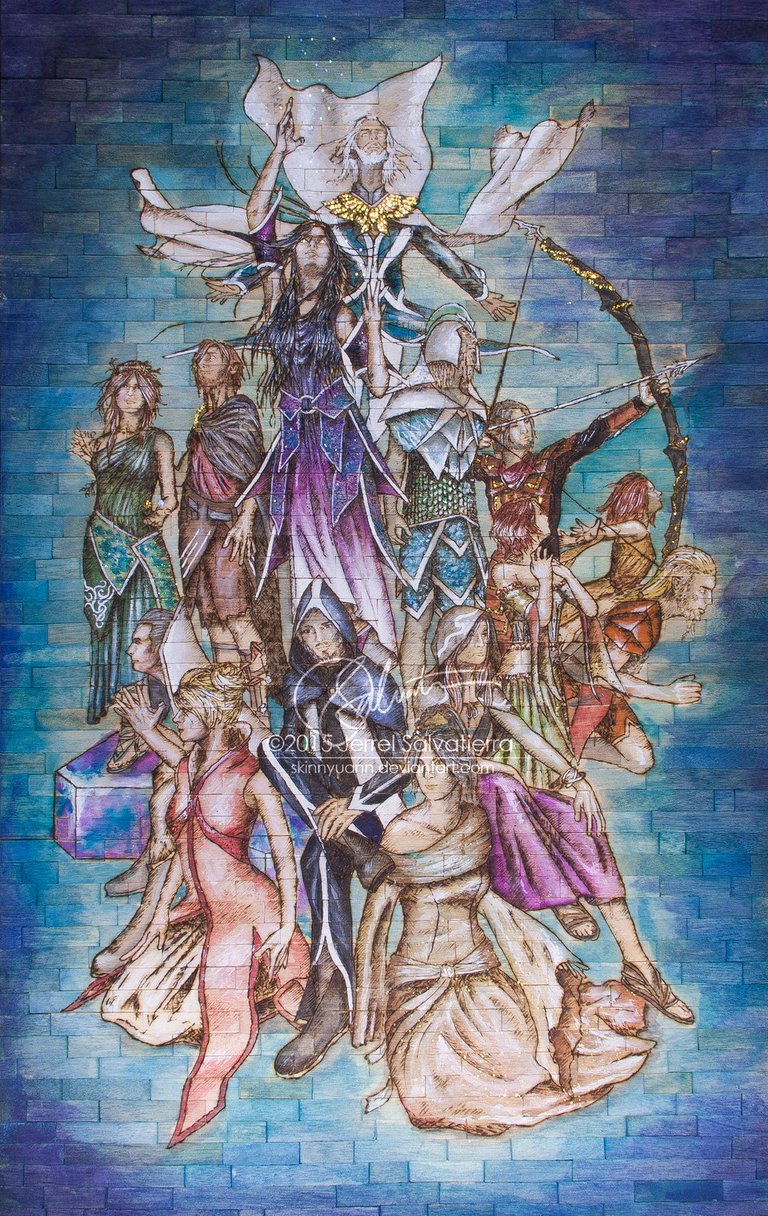
The War of the Powers, also known as the Battle of the Powers, the Great War of the Gods, and the War of the Gods, was fought in the Years of the Trees between Melkor and the Valar who sought to free the Elves from Melkor's influence.
Background
In the ages prior to the sun, Arda was reformed by the massive energy released when Melkor destroyed the original light sources, the Two Lamps. The Valar fled the razing to the newly formed continent of Aman and built Valinor, while Melkor reigned unchecked in the new continent of Middle-earth, where he corrupted the surviving beasts. Unaware of these designs, the Valar did not approach him for fear that the confrontation would be just as world-devastating as the extinguishment of the light. Their priority was to protect the original plan of creation, though they were unsure of what was salvageable. They did not know if Eru's personal creations, Elves and Men, would now ever come into being after the catastrophe.
Fortunately, the Elves did come to being; however, they appeared in Middle-earth near Cuiviénen. Withdrawn, the Valar were unaware of this. On the other hand, Melkor quickly learned of this through his spies. Soon, Elves who wandered too far from their lands were captured and taken to Utumno. There, in Melkor's utmost contempt for Eru and his sole ability to create life, they were corrupted through torture into servants bred solely for war - Orcs.
Sometime later, while on a hunting trip in Middle-earth, the Valar Oromë stumbled upon the Elves that were unharmed. After realizing what they were, he asked them to return with him to Valinor for their protection. While the majority of them agreed, a some refused, believing him to be their kidnapper. When Oromë returned with the Elves willing to leave with him, the Valar were made aware of Orcs. Their creation was most-likely seen as the worst imaginable offense. Manwë and the rest of the Valar could stand this no longer, and so the Valar took counsel with each other and decided to rid Middle-earth of Melkor's tyranny.
The War
Soon, the Valar declared war on Melkor, presumably assembling a massive army of light, and battled him for many decades. The Host of the Valar easily defeated Melkor's host in north-western Middle-earth near Angband. The remnant of his forces fled back to Utumno and fortified themselves there. The Valar passed over Middle-earth and placed a guard over Cuiviénen to protect the Elves from any further effects of the war or perhaps from an attack from Melkor's servants. Then, the Host of the Valar went north to Utumno and besieged it. In their haste to attack Utumno, the Valar did not fully cleanse Angband of evil creatures, who lingered in its deepest pits. After decades of siege, the Host of the Valar finally broke through and after Tulkas himself personally defeated Melkor in combat, they captured him and took him to Valinor for judgment, sentencing him to prison in the Halls of Mandos for thousands of years.
Aftermath
The war between the two powers devastated the lands of Middle-earth and the face of the continent was changed. The distance between Middle-earth and Aman separated by the Great Sea became wider. A Gulf in south was created and small bays appeared between the Great Gulf and Helcaraxë. The Mountains of Hithlum and the highlands of the Dorthonion were created. The Sirion river that flowed into the newly formed Bay of Balar appeared. Free of evil, the Elves were invited to Valinor and undertook a Great Journey across Middle-earth in which new Elven cultures were developed. The result was the peopling and colonization of the western parts of Middle-earth with the Children of Ilúvatar.
Following the War, the Balrogs hid in the ruins of Angband. This fortress would become Melkor's stronghold on his eventual return to Middle-earth.
Sources
Adapted from the original article, under CC BY-SA 3.0.