Place
White Mountains
The White Mountains, or Ered Nimrais, were a mountain range in Middle-earth…
The White Mountains, or Ered Nimrais, were a mountain range in Middle-earth that ran from east-to-west across the northern length of Gondor.

Description
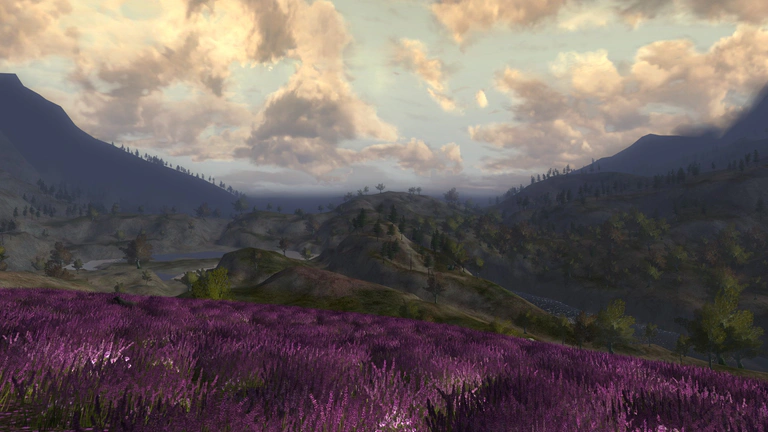
The mountains were named after the glaciers of their highest peaks. The range lay mostly east-west, but also had a northern section, which was separated from the main line of the Misty Mountains by the Gap of Rohan. Even at the southern latitude of Gondor and Rohan, the White Mountains bore snow even in summer, suggesting they were extremely high. The range had no passes. The Paths of the Dead lay beneath it, but only the most courageous or foolhardy ever ventured that route. The White Mountains formed the northern boundary of Gondor and the southern boundary of Rohan except in their easternmost part, where Gondor's province of Anórien lay to the north of the mountains.
Because of their always bearing snow at their highest peaks, the White Mountains must have been at least 4800 meters (16'000 feet) above sea level, with occasional peaks probably in excess of 5500 meters. They were, however, not as high as the Misty Mountains.
Its notable peaks included Írensaga "Iron Saw" and Starkhorn. Between these two lay the Dwimorberg, entrance to the Paths of the Dead.
At the eastern end, the city of Minas Tirith was carved into the Hill of Guard beneath Mindolluin. The Warning beacons of Gondor were placed on foothills along the range: Amon Dîn, Eilenach, Nardol, Erelas, Min-Rimmon, Calenhad, and Halifirien.
Several rivers raised in the White Mountains, among them the Adorn (a tributary of Isen), and the Snowbourn and Mering Stream (tributaries of the Entwash); and, on the south side, the Erui (a tributary of Anduin), the Ringló and its tributary Ciril, which together with the Morthond all entered the Bay of Belfalas at Edhellond near Dol Amroth, the Lefnui of the Anfalas, and the Five Rivers of Lebennin.
History
The natives to the White Mountains were Drúedain, who settled the region in the Second Age. The only remnant of their presence in these mountains were their statues, called the Púkel-men. Sometime thereafter, evil men related to the Dunlendings drove the Drúedain out. Some of these men swore allegiance to Isildur, but betrayed him when he required their help, and were cursed into the Army of the Dead.
Following the War of the Dwarves and Orcs some surviving Orcs fled south and attempted to settle in the White Mountains. Between TA 2800 and TA 2864 these Orcs plagued the parts of Gondor and Rohan near the mountains, killing King Walda, but they were finally hunted down and destroyed by his son Folca.
Aragorn, Legolas, and Gimli followed the Paths of the Dead in the year 3019 of the Third Age and convinced the Army of the Dead to fight for Gondor in the War of the Ring. After they did so, Aragorn released the Dead, for they had fulfilled their oath. After the War of the Ring, Dwarves settled in the Glittering Caves.
Sources
Adapted from the original article, under CC BY-SA 3.0.