Work
The Hobbit: An Unexpected Journey
First film of The Hobbit film trilogy, lasting 3 hours and 2 minutes
The Hobbit: An Unexpected Journey is the first film of The Hobbit film trilogy, lasting 3 hours and 2 minutes. It was directed by Peter Jackson, who previously had directed The Lord of the Rings film trilogy. It was a major box office success, grossing over $1.017 billion worldwide. The film is the fourth Middle-earth film adaptation to be released, and the first chronologically.
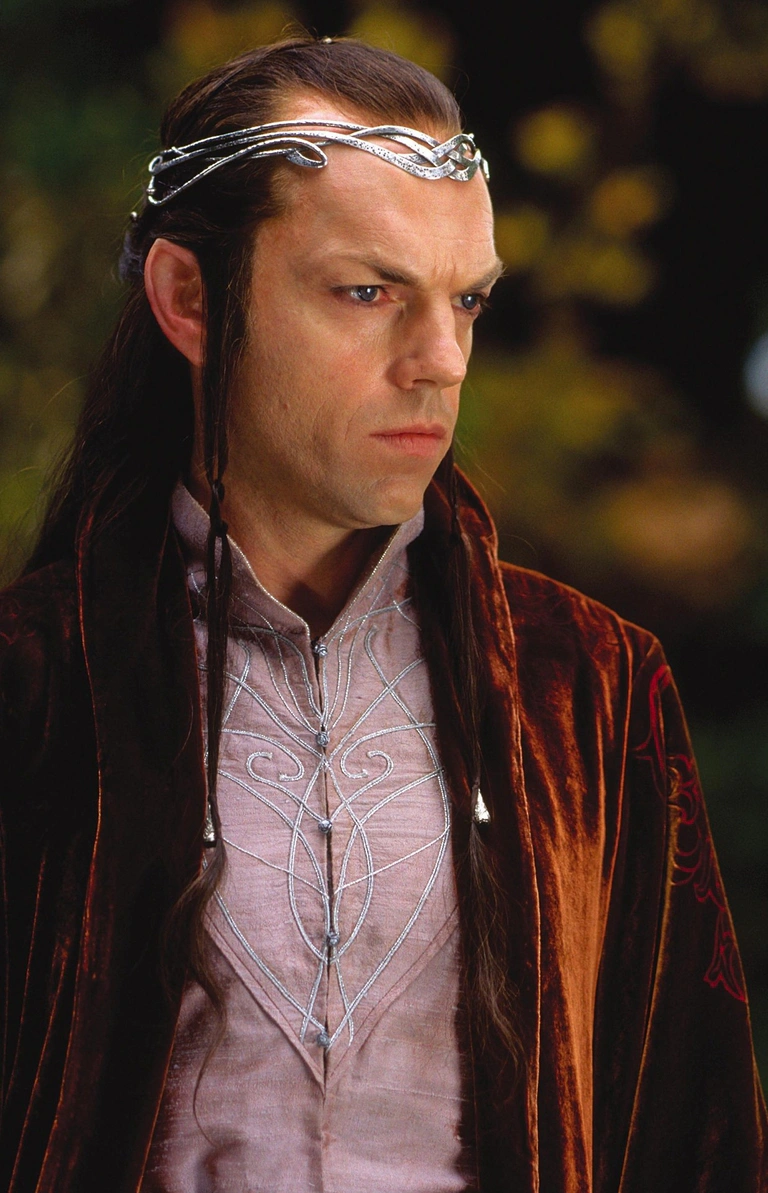
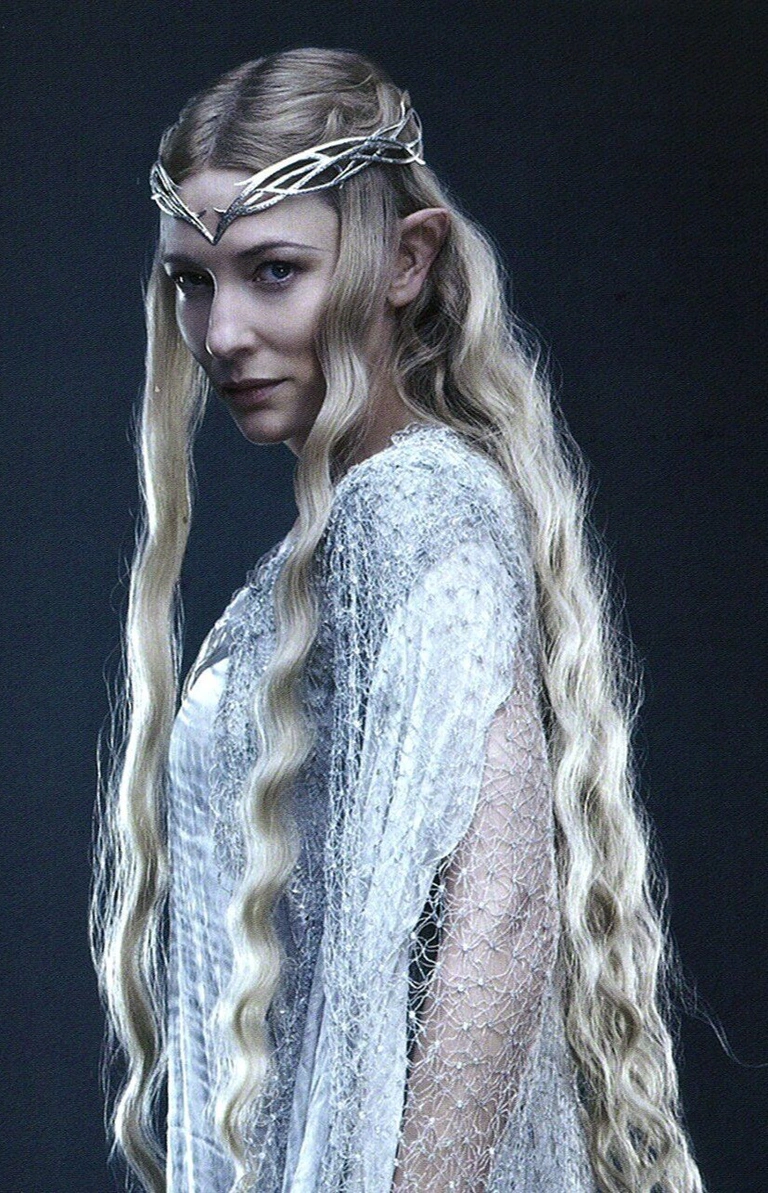
Martin Freeman portrays a young Bilbo Baggins and Ian Holm reprises his role as an older Bilbo Baggins. Ian McKellen and Andy Serkis reprise their roles as Gandalf and Gollum, respectively, as do Hugo Weaving and Cate Blanchett, as Elrond and Galadriel.
The character of Radagast the Brown appears in the movie and is portrayed by Sylvester McCoy, who had been known mostly for his portrayal as the seventh incarnation of The Doctor on Doctor Who.
Plot
A reluctant Hobbit, Bilbo Baggins, sets out to the Lonely Mountain with a spirited group of Dwarves to reclaim their mountain home, and the gold within it from the dragon Smaug.
Credits
Main
Ken Stott as Balin
Graham McTavish as Dwalin
William Kircher as Bifur
James Nesbitt as Bofur
Stephen Hunter as Bombur
Dean O'Gorman as Fíli
Aidan Turner as Kíli
John Callen as Óin
Peter Hambleton as Glóin
Jed Brophy as Nori
Mark Hadlow as Dori
Adam Brown as Ori
Minor
Sylvester McCoy as Radagast
Barry Humphries as Great Goblin
Jeffrey Thomas as Thrór
Michael Mizrahi as Thráin
John Rawls as Yazneg
Stephen Ure as Fimbul
Timothy Bartlett as Master Worrywort
William Kircher as Tom
Peter Hambleton as Bert
Mark Hadlow as William
Bret McKenzie as Lindir
Stephen Ure as Grinnah
Kiran Shah as Goblin Scribe
Manu Bennett as Azog
Conan Stevens as Gundabad Orc Chieftain
Benedict Cumberbatch as Smaug and Necromancer
Glenn Boswell as Dwarf Miner
Thomas Robins as Young Thráin
Extended Edition only
Luke Evans as Girion
Dan Hennah as The Old Took
Stephen Gledhill as Old Gammidge
Tim Gordon as Old Hob
Oscar Strik as Little Bilbo
Sonia Forbes-Adam as Belladonna (Took) Baggins
Erin Banks as Lobelia Sackville-Baggins
Brian Hotter as Otho Sackville-Baggins
Eric Vespe as Fredegar Chubb
Mervyn Smith as Tosser Grubb
Ruby Acevedo as "Cute Young Hobbit"
Katie Jackson
Honor McTavish
Louis Serkis
Ruby Serkis
Sonny Serkis
Uncredited
People of Dale
Mary Nesbitt
Peggy Nesbitt
Many unknowns
Dwarves of the Lonely Mountains
Dave Dyer
Jabez Olssen
James Wells
Richard Whiteside
Many unknowns
Mirkwood Elves
Brendan Casey
Cameron Jones
Carl Van Room
Few unknowns
Hobbits of the Shire
Joan Z. Dawe
Chris Kern
Melissa Kern
Aaron Morgan
Kaela Morgan
Ravi Narayan
Many unknowns
Hunter Orcs
Frazer Anderson
George Harach
Christian Hipolito
Ane Kirkeng Jørgensen
Joseph Mika-Hunt
Elliot Travers
Many unknowns
Elves of Rivendell
Jared Blakiston
Shane Boulton
Melanie Carrington
Andrew Fitzsimons
Luke Hawker
Dean Knowsley
Luke Wilson
Many unknowns
Goblins
Shane Boulton
Renee Cataldo
Ben Fransham
Tim McLahlan
Nathan Meister
Ravi Narayan
Terry Notary
Thomas Rimmer
Kiran Shah
James Trevena-Brown
Mark Trotter
Others
Deviations from the book
Elijah Wood appears briefly as Frodo Baggins, while this character does not appear in the book. However, his appearance is purely a cameo as the set-up for the movie, as the Red Book of Westmarch is being written and read by Bilbo, shortly before the start of The Lord of the Rings: The Fellowship of the Ring.
The Dwarves do not arrive in order (first Dwalin, then Balin, then Kíli and Fíli, then Óin, Glóin, Dori, Nori, Ori, Bifur, Bofur, and Bombur all at once, and then Thorin arrives significantly later) and they do not have their multi-colored hoods or beards as they did in the book.
Bilbo was shown to be allergic to Horses.
The Dwarves surrender when the Trolls threaten to rip Bilbo in two instead of being overpowered and popped into bags.
Bilbo goes to the Trolls because they steal the Dwarves' ponies.
In the book, it was Gandalf that stalled the trolls until they turned into stone. This was done by Bilbo in the film.
The trolls' cave is wide open, and there is no locked door blocking it.
In the book, Bilbo finds Sting and takes it. In the film, Gandalf comes upon it and gives it to Bilbo.
The group is attacked by Orcs on the way to Rivendell, just after the Trolls sequence in the movie. This did not happen in the book.
Radagast the Brown aids the Dwarves in escaping the Orc Warg-riders near Rivendell. In contrast, Radagast did not appear in the book at all, and there is only one mention of him.
Radagast investigates the darkness of Mirkwood, and at Dol Guldur encounters the Necromancer and the Witch-king of Angmar, with whom he briefly duels and from whom he takes a Morgul Blade. In contrast, Tolkien never wrote of any such incident.
Azog has survived the War of the Dwarves and Orcs in which he was wounded by Thorin, who cut off his arm, and hunts Thorin Oakenshield and his followers. In contrast, in the Tolkien literature Azog was beheaded by Thorin's cousin Dáin Ironfoot in the Battle of Azanulbizar, well before the events of The Hobbit. The events of leading to and included in the battle are also altered: Thrór leads an army to Moria to reclaim it as opposed to investigating it with a single companion, and he is beheaded during the battle while in the books this occurred several years beforehand. The origin of Thorin's name of Oakenshield is taken from the appendices of The Return of the King, but here takes place during battle with Azog and involves him picking up an oaken branch rather than cutting it off a tree.
While at Rivendell with Thorin's party, Gandalf meets with Elrond, Galadriel, and Saruman (the film's version of the White Council) and relates Radagast's news about Mirkwood, but Saruman discounts Radagast's news about the Necromancer, who he says must be no more than a human pretending to be a wizard. This conflicts with Tolkien's version, in which the White Council already knew that the Necromancer was Sauron and was at Dol Guldur, since Gandalf had already confirmed this 89 years earlier, and Saruman had discovered two years earlier (although he did not inform the Council of this) that Sauron had learned of Isildur's loss of the One Ring at the Gladden Fields by the river Anduin and his servants were searching the area. Accordingly, in Tolkien's original version, in the year of the events of The Hobbit, Saruman finally agreed to an attack on Dol Guldur because he wanted to prevent Sauron from finding the Ring.
There is no mention of Galadriel in the book, although she is part of the White Council.
At the White Council meeting, Galadriel relates how the Witch-king of Angmar, after his defeat near Fornost, had been killed and sealed in a tomb in that could not be opened in the High Fells. This is a serious departure from canon (Tolkien's writings), in which the Witch-king had not died, but fled. In fact, Glorfindel had stopped pursuit of the Witch-king and prophesied, "Do not pursue him! He will not return to these lands. Far off yet is his doom, and not by the hand of man will he fall." This prophecy, of course, was the basis for the later dramatic moment in The Lord of the Rings in which Éowyn was able to kill the Witch-king because she was not a man. This prophecy no longer makes sense if the Witch-king had already been killed and is now (as Saruman implies) just a spirit raised by a necromancer who could "summon the dead." Furthermore, per Tolkien the White Council knew the Witch-king had not been killed because he and the rest of the Nazgûl had previously been fighting with Gondor and had captured (and presumably killed) the last King of Gondor at Minas Morgul in TA 2050, long after he had fled Fornost. It is possible, however, that the Ringwraiths could not die due to their Wraith nature and were imprisoned in the tombs, and only Sauron had the power to call them forth. As for how they presumably killed the last King of Gondor, Galadriel never specifically says if the other Ringwraiths were sealed in the High Fells along with the Witch-king when Angmar fell. So it is possible that the other Ringwraiths challenged and killed Eärnur, and were defeated and sealed with their leader centuries later.
When traveling along the mountain pass, Bilbo observes the stone-giants hurling rocks at a distance, "across the valley." Bilbo and his companions take refuge under a hanging rock during the thunderstorm (thunder-battle), but are never involved in the stone-giants' game.
In the book, it was Bilbo that alerted the party when the trapdoors in the Front Porch open. In the film, the Dwarves realize this just as they fall into the hole.
In the book, the Goblins only had tunnels, not rope bridges.
In the book, Bilbo is with the Dwarves when they are taken to the Great Goblin and later rescued by Gandalf. In the film, Bilbo is separated from the group and falls to Gollum's cave before the Dwarves are taken to the Great Goblin.
In the book The Hobbit, as in the prologue to The Fellowship of the Ring film, Bilbo Baggins finds the One Ring by chance when his hand happens to fall upon it as he is crawling through one of the dark Goblin-town tunnels, well before he comes across Gollum. In this film, Bilbo sees Gollum fighting with a Goblin and we see Gollum drop the Ring during the fight.
Gollum has six teeth in the book, not nine.
In the book, when Gollum and Bilbo were playing the game of riddles, the cave was pitch black and Bilbo could only see Gollum's glowing eyes and hear his voice echoing through the walls of the cave. In the film, the cave was partly lit up and Bilbo could see Gollum entirely.
In the book, Gandalf saves the Dwarves in the goblin cave with a storm of burning smoke and instantly slays the Goblin King with his blade. In the film, the Goblin King is merely knocked aside in this scene (though many of his minions die in the telekinetic blast), and slain later on.
In the film, Gandalf does not use multi-colored fire when lighting the pine cones.
Extended Edition
The extended edition of The Hobbit: An Unexpected Journey was released on October 22, 2013 for digital downloads and November 5 2013 for hard copies. It includes these scenes:
1) The introduction. The Elvenking Thranduil is given more screen time. He approaches the throne while Thráin gestures for a Dwarf to show Thranduil a chest of gems. As Thranduil looks entranced and reaches for it, the Dwarf closes the lid. Bard's ancestor Girion is given screen time. He is seen behind his Wind lance attempting to shoot down Smaug during the dragon's attack on Dale.
2) Bilbo's introduction to himself. A flashback wherein a young hobbit boy comes running up to Gandalf and plays with him. His mother Belladonna runs after him and acknowledges Gandalf as an old friend.
3) After Bilbo meets Gandalf on the front bench, he buys supper from Hobbiton while suspiciously looking around everywhere to make sure Gandalf is not around.
4) Kíli glances over to a female Elf in Rivendell and winks at her. Dwalin sees him and Kíli begins making excuses. In one of his excuses, he mistakenly calls another male Elf a female and Dwalin corrects him. The rest of the Dwarves laugh much to Kíli's embarrassment.
5) While eating, Nori and Óin complain about the song played by the Elf musicians. Bofur climbs up a platform and begins singing. The other Dwarves join in and start throwing food around. Elrond and Lindir look surprised and angry about Dwarves activities because they start throwing fruit to Elrond, Lindir and Bofur but they say nothing about it.
6) Bilbo is wandering around Rivendell during the daytime. He approaches the statue holding the shards of Narsil before a particular painting catches his eye. The painting depicts Isildur about to cut the One Ring from Sauron's hand. Bilbo is particularly interested in the One Ring on Sauron's hand.
7) A conversation between Bilbo and Elrond in Rivendell. Elrond also welcomes Bilbo to stay in Rivendell if he wishes.
8) Lindir complains to Elrond about the Dwarves' behavior. They find them swimming in a large fountain.
9) Gandalf and Elrond further discuss Thorin and Company's quest. Elrond voices his concern of Thorin himself, since both his grandfather and father succumbed to madness. Bilbo and Thorin overhear this conversation.
10) At the White Council, Gandalf brings up the fact that the Ring of Power once owned by Thorin's father mysteriously vanished. Saruman dismisses this as it would be of no use since all believe the One Ring was lost long ago.
11) A new song from the goblin king and longer interrogation.
Sources
Adapted from the original article, under CC BY-SA 3.0.