Place
High Pass
Important pass over the Misty Mountains east of the elven refuge of Rivendell
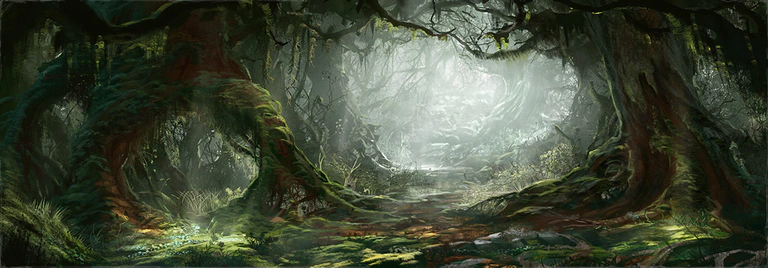
The High Pass, also known as the Pass of Imladris and Cirith Forn en Andrath, was an important pass over the Misty Mountains east of the elven refuge of Rivendell. Somewhere close to Rivendell a long, hard, and dangerous Mountain-path climbed into the mountains until it reached the mountain above Goblin-town on its way to the High Pass. From the High Pass the ancient Menn-i-Naugrim descended to the Vales of Anduin to the river Anduin and then on into Mirkwood forest.

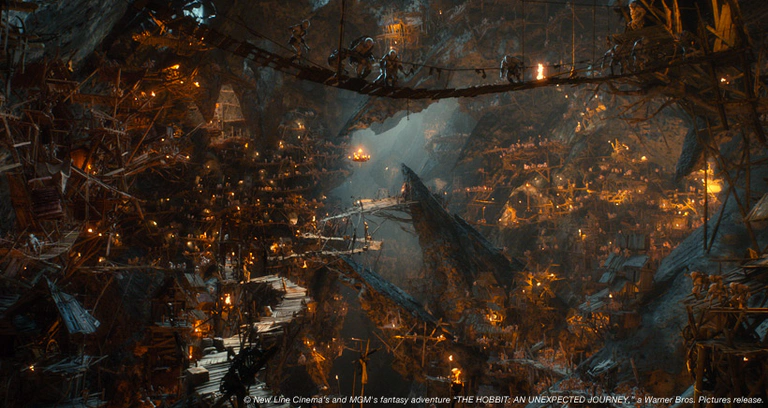
There were two passes near Goblin-town: the High Pass and another pass that was easier to travel. The main gate of Goblin-town was located near the easier pass. Because the Orcs of Goblin-town had often caught travelers who spent the night near the main gate in the easier pass, travelers stopped using that pass and used the High Pass instead. However, the Orcs created a new entrance in a cave near the High Pass.
History
The High Pass was first created before the First Age by Oromë the Vala, in order to allow for a crossing of the mountains by the Eldar. Later in the First Age the High Pass was found by the Dwarves, who connected the East-West Road and the Menn-i-Naugrim through Mirkwood with the Mountain-path.
In the year 3434 of the Second Age, Isildur and the main part of Gil-galad's army and a part of the army of Arnor used the High Pass and the Redhorn Gate to cross the Misty Mountains on their march to Mordor in the War of the Last Alliance of Elves and Men. After this war, Isildur was slain on his way back from Gondor to Rivendell at the Gladden Fields by Orcs that had been sent there before the war by Sauron to watch the passes.
During the Third Age, the pass was frequently trodden by traveling Dwarves, who often came into contact with the Harfoot-Hobbits farther south in the Vales of Anduin. The breed of Hobbits named the Fallohides lived in northern forests adjacent to the High Pass, and this is the way they migrated into Eriador to flee the spreading shadow of Mirkwood.
In the later Third Age, the High Pass became dangerous again because of the Orcs increasing in the mountains. Only after the War of the Dwarves and Orcs, which nearly wiped out all of the Northern Orcs, did the pass become safe again. Nevertheless, in the year 2940, the Orcs of Goblin-town had burrowed their way back to it, and Bilbo Baggins and the Dwarves of Thorin's company were captured there the next year during the Quest of Erebor.
After the Battle of Five Armies, the pass was once again free from danger and was maintained by the Beornings, and for many years afterwards it became important for trade between Eriador and Rhovanion. During the War of the Ring, Grimbeorn the Old and the Beornings kept the High Pass open, but the Fellowship of the Ring ignored the High Pass because the eastern side of the Misty Mountains had become too dangerous due to a winter snowstorm.
In adaptations
The High Pass is portrayed in a number of adaptations, including The Battle for Middle-earth II as the site of a conflict between goblins and Elves.

It also appears in The Hobbit: An Unexpected Journey in much the same capacity as in the book, though Gandalf does not join Thorin and Company for the crossing.
Sources
Adapted from the original article, under CC BY-SA 3.0.