Person
Mîm
Mîm was the last chieftain of the Petty-dwarves in Nargothrond before being…
If only I could forgive, I might still catch the shape of one leaf at least, of one flower with dew on it as it shone in the spring by Tarn Aeluin when I was young, and the skill first ran down into my fingers. But Mîm cannot forgive. The embers of his heart still burn him. Tink-donk donk-tink! No time to think!
Mîm was the last chieftain of the Petty-dwarves in Nargothrond before being driven out after attempting to murder Finrod in his sleep. Later, when he and his sons were among the last of the Petty-dwarves, he took Túrin and his band of outlaws, the Gaurwaith, into his house at Amon Rûdh in ransom for his life. Though he initially took a liking to Túrin, the arrival of the Elf Beleg aroused his hatred and jealousy and he betrayed them to the Orcs of Morgoth.
Mîm eventually made his way back to Nargothrond following Túrin's slaying of the dragon Glaurung where he claimed its treasures. He was soon after slain by Húrin, but in his dying breaths he cursed the treasure. Mîm's curse would go on to have significant repercussions, including bringing about the eventual ruin of Doriath during a battle in the Thousand Caves. The most renowned item to come of Mîm's cursed treasure was the Nauglamír, which would eventually bear a Silmaril.
Earlier years at Nargothrond
For Mîm came of Dwarves that were banished in ancient days from the great Dwarf-cities of the east, and long before the return of Morgoth they wandered westward into Beleriand.
On the Narog river was a series of caves settled by the Petty-dwarves which they had named Narukuthûn. By the year 52, only a remnant led by Mîm, their chieftain, lingered there, and they aided Finrod who sought to make a strong place that would be comparable to Menegroth. They were generously rewarded by Finrod for this. Eventually Finrod had further help from the Dwarves of the Blue Mountains in extending the fortress, but these Great Dwarves despised the Petty-dwarves and had no compunction in ousting them, especially when it was for great rewards. Mîm developed a special hatred for the Elves because of this. Mîm would then attempt to murder Finrod in his sleep, but this failed and he was driven out along with the rest of his people into the wild.
At some point Mîm relocated to another Petty-dwarf settlement, Bar-en-Nibin-noeg beneath Sharbhund in Methiriad, where caves had been deepened and bored far under the hill during the long years that the Petty-dwarves had dwelt there. These cavernous halls were spacious enough to house a hundred or more at need.
Encounter with Túrin

But now at last they had dwindled and died out of Middle-earth, all save Mîm and his two sons; and Mîm was old even in the reckoning of Dwarves, old and forgotten.
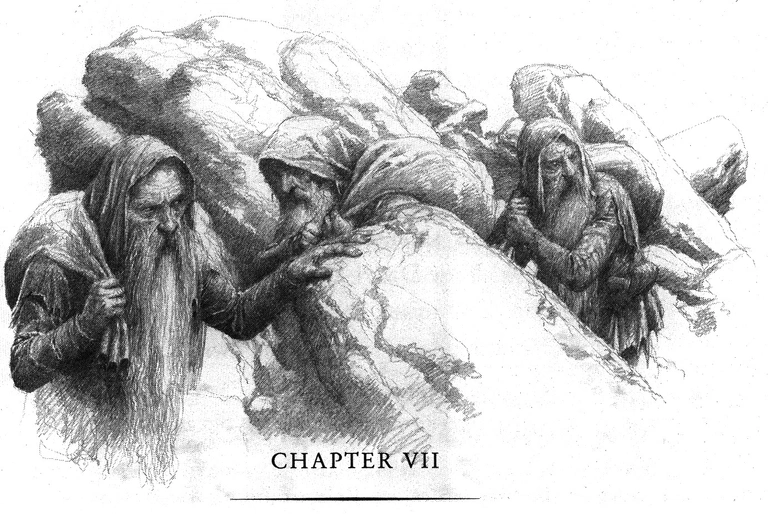
In the year 486, Mîm and his sons, Ibûn and Khîm, were out gathering in a place of many great stones, leaning or tumbled together. They may have been seeking for old treasures of a dwarf-house near these flat stones, and been carrying ingots of gold in heavy sacks which had been disguised. Unluckily, they were spotted by a band of roaming outlaws who then pursued them, with one of the outlaws, Andróg, shooting at them with his bow. While Ibun and Khîm managed to escape into the dusk, Mîm lagged behind and was seized, though he struggled and bit like a beast, wounding Andróg's hand. Andróg assumed that Mîm was either an Orc or was of Orc-kin, and should be killed. This sentiment was echoed by another outlaw, Ulrad, who felt cheated upon finding that Mîm's sack seemingly only contained roots and small stones. The leader of the outlaws, Neithan, stayed them however, and bid for Mîm to be let up and permitted to speak.

Mîm pleaded that he was old and poor, and for Túrin to not let him be slain without cause. When Túrin asked him what he could offer in ransom and noted that they were looking for a dwelling, Mîm offered to share his dwelling with them. Túrin accepted this, and swore to him that if they were brought there without trickery, then he would not be slain by any of the outlaws. Since it was late and dark, Mîm initially wished to depart and return for them the next day, but Túrin denied this without the pledge of his sack. When Mîm refused to be parted from it, Túrin had him brought to their camp despite Mîm cursing in Khuzdûl along the way; when they arrived, the outlaws put bonds on his legs, at which point he stopped cursing.
The next morning, they released Mîm, and he declared that he would not forgive them for it tried to take back his promise. Túrin responded that Mîm still had to lead them to his home, and then stared into Mîm's eyes until Mîm could no longer endure it; he then beckoned for Túrin and the outlaws to follow him.
Mîm spent the day guiding the outlaws, marching to Amon Rûdh. Once there, they climbed through hidden and perilous paths until they eventually arrived at the entrance to Bar-en-Nibin-noeg. After bidding them to enter, Mîm renamed the dwelling to Bar-en-Danwedh. As they entered, Ibun approached from around a corner with a small torch and informed Mîm in Khuzdûl that Khîm had been struck by the earlier arrow, and had just died at sunset. Mîm was grieved by this, exclaiming that being held in bondage by the outlaws had prevented him from able to heal his son. Túrin, pitying Mîm, claimed that he now held himself in Mîm's debt, promising that he would pay Mîm a heavy ransom of gold from any wealth he came by. Though Mîm marveled at Túrin’s promise, he demanded that Andróg break his bow and arrows and lay them at his sons feet; he further cursed Andróg that he shall never again take arrow or bow, otherwise he shall die by it. Andróg begrudgingly did this, but cursed Mîm in turn that he would die with a dart in his throat.

The next day, Mîm stated that he and Ibun would serve as guides when the Men went out, sharing his earth-bread with all of them except Ulrad because he had been the one who put bonds upon him earlier. The outlaws remained there for the rest of year, going on no more raids and only stirring abroad for hunting or gathering of food. While Mîm tolerated them, the outlaws eventually became uneasy about sharing the dwelling with Mîm, as he would often appear out of some shadowy corner or doorway when they thought he was elsewhere. It was otherwise for Túrin however, as he became ever more friendly to Mîm, often sitting for hours listening to his councils, lore, and tales of his life. As a result, Mîm became pleased by this, and sometimes allowed Túrin to enter his smithy.
In midwinter, Beleg the Elf, a dear friend of Túrin, suddenly came among them, bearing great items such as the Helm of Hador and lembas from Melian. Mîm hated Beleg, as he was one of the Sindar, the Elves hated the most. This hatred grew as he became jealous of the love that Túrin bore to Beleg and it became fiercer when Beleg seemingly undid the curse he had laid on Andróg: the outlaw had taken up bow again, and was struck by a poisoned orc-arrow, but his life was saved by Beleg. At one point, Mîm theorized that if he ate some lembas, he would renew his youth and grow strong again. However, since he could not obtain it stealthily, he feigned sickness and begged for it from Beleg, only for the Elf to refuse. This set the seal on Mîm's hatred.
Together, Túrin and Beleg did great deeds and pushed back Morgoth's forces, but in response Morgoth sent a great many spies to locate their hideout. Mîm became aware of the presence of Orcs in the lands around Amon Rûdh, and he and his son Ibun soon became ensnared with them. Differing tales speak of this being either an intentional act by Mîm due to the hatred he bore against Beleg, or unintentional due to Ibun being captured and threatened with torture. Either way, Mîm agreed to lead Morgoth's forces to Túrin's hiding place, but on the following conditions: that he be paid the weight of iron for any Man they caught or slew, but of Túrin and Beleg in gold; for Mîm's house be left to him; for Beleg be left bound for Mîm to deal with; and for Túrin to be let go free. The emissary of Morgoth readily agreed, though with no real intention of upholding the promises, and insisted that Ibun be kept as a hostage. Mîm became afraid at this and tried to back out, but with the Orcs holding Ibun, he was obliged to guide them.
Mîm led the Orcs through the secret paths, resulting in the sacking of the hideout. All of the outlaws were struck down, with Andróg being mortally wounded by an arrow, and Túrin and Beleg captured with nets. Only Andvír managed to escape. Túrin was carried off, but Beleg was left wounded and bound with his wrists and ankles tied to iron pins driven into the rock. Mîm, who had been lurking in the caves during the battle, emerged to gloat over Beleg while sharpening a knife. Andróg, however, managed to crawl through the dead bodies, seizing a sword which he thrust at the Dwarf. Mîm fled, retreating down a steep and difficult goat's path, shrieking in fear.
Return to Nargothrond
Now Elves and Men shall rue this deed, and because of the death of Mîm the dwarf shall death follow this gold so long as it remain on Earth, and a like fate shall every part and portion share with the whole.
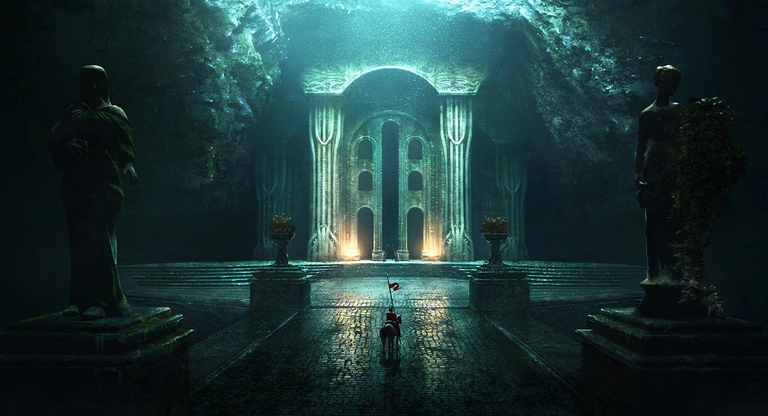
Eventually in the year 499, after Túrin had slain Glaurung, Mîm made his way back to ruined Nargothrond. Finding the halls unguarded, he took possession of the hoard, sitting there joyfully while "fingering the gold and gems" through his hands. He also sang many "black songs of enchantment" to bind the hoard to himself.
In the year 502, when a band of outlaws led by Húrin, who had witnessed all that had happened to Túrin due to being cursed to see with Morgoth's eyes, came to the Doors of Nargothrond, Mîm met with them, demanding to know their purpose. When Húrin refused to answer, Mîm told him of his own history and claim to the hoard, only for Húrin to vindicate Mîm as partially responsible for Túrin's fate. Despite Mîm's attempts to beg for his life, Húrin slew him.
However, with his dying breath, Mîm uttered a final curse on the treasure of Nargothrond. After this, Húrin's company then took the treasure to Doriath. As a result of Mîm's curse, however, most of the company was slain in quarrels amongst themselves along the way.
In other versions
Note that in the published The Silmarillion Mîm hardly appears. His role is much expanded in the Narn i Chîn Húrin as published in the Unfinished Tales of Númenor and Middle-earth, and in The Wanderings of Húrin.
The Book of Lost Tales
In Turambar and the Foalókë, Mîm is the Dwarf captain of the guards in the service of the dragon Glorund in the caves of the Rodothlim. He was left to watch Glorund's dwelling and treasury when Glorund set forth to confront Turambar.
Eventually, however, Glorund was slain and Turambar's father, Úrin, came with a band of rogue Elves to take the treasure. Upon entering the caves of the Rodothlim, they found that all of the Orcs had fled following the death of Glorund, and only Mîm still remained.
When the Elves approached, Mîm stood before the doors of the cave that were once the abode of Galweg. Mîm warned them hearken to the words of "Mîm the fatherless" that they should touch the gold "no more than were it venomous fires": it was cursed for Glorund having lain on it for many years, with only Mîm being able to ward it, and by many a dark spell he had bound it to himself. Though Úrin initially wavered, he still bid his men to seize the treasure, and Mîm then broke forth into terrible curses, and for those evil words Úrin then smote him. Dying, Mîm uttered a final curse on the gold.
In The Nauglafring, the treasure is brought before King Tinwelint of Artanor (Thingol of Doriath) and the curse of Mîm begins its course with greed for the treasure resulting in fighting between Úrin's outlaws and Tinwelint's woodland Elves. After the outlaws were slain, the Queen, Gwenniel (Melian), warns Tinwelint to touch not the gold as it is "trebly cursed": by the dragon's breath, by the blood of Tinwelint's subjects, and by the death of the outlaws; even more than that though, "some more bitter and more binding ill" hung over it which she could not see.
At the suggestion of Ufedhin, Tinwelint eventually agreed to have the Dwarves of Nogrod forge items from this treasure, with the greatest of them being the Nauglafring (Nauglamír), a carcanet intended to host the Silmaril. After Tinwelint donned the Nauglafring, and the curse of Mîm fell upon him, the Dwarves then asked an outrageous price for their work; for their insolence Tinwelint instead had them whipped and sent off with a meagre reward.
Naugladur, the King of Nogrod, then long pondered how to both avenge this insult and sate his greed. Messengers then arrived from Bodruith, the King of the Dwarves of Belegost, informing Naugladur how the treasure had been acquired by the death of Mîm: at this Naugladur "vowed to rest not ere Mîm was thrice avenged" and concluded that "the gold belongs of right to the people of the Dwarves". The forces of Nogrod and Belegost, joined with a gathered host of Orcs, eventually attacked Artanor and slew Tinwelint, with Naugladur taking possession of the Nauglafring. The curse continued however, with the Nauglafring causing betrayals by Ufedhin and Bodruith in their attempts to seize it for themselves, and providing Beren a means to slay Naugladur in single combat.
At one point, the role of traitor in Turin's outlaw-band was given to an Elf named Blodrin that had lived among the evil Dwarves and become like them and an Easterling named Blodren, who was captured by Morgoth. The two ideas were later merged into Mîm's character.
In the version published in The Silmarillion in 1977, there is no reference to the curse, only the Nauglamir is taken from the hoard, and all the actions that occur appear to be due to greed and paranoia of all involved. In cold blooded murder and wicked actions, Thingol was slain inside the caves, and the Dwarves working for him steal his treasures, and the necklace, and then are later slain themselves. Much of this was an invention by Christopher Tolkien and Guy Gavriel Kay because they had not known of the existence of the "Concerning ... 'The Hoard'" manuscript.
The Compaint of Mîm the Dwarf
In 1961 or 1962, Tolkien wrote a poem and short narrative titled The Complaint of Mîm the Dwarf, but its place within the legendarium is unknown. In the poem, the lamentation of Mîm narrating his life is provided.
This account tells that Mîm used to live near Tarn Aeluin in Dorthonion, where, in youth, he made his first work of art: a flower with dew on it. Only once he became old did he stop and marvel at his creations, and how he had poured almost all of himself into them. To properly hoard them, Mîm then created a great, intricate coffer. With his works thus well-stored, he slept with his head upon the chest.
He awoke after some unknown amount of time to find people raiding his dwelling, setting it aflame. They took all his possessions, and chased him away, leaving him with only a sack of hand-tools and a secret knife with poisoned runes on its blade. Now old and bitter, he came to a refuge in the wild mountains where tried to begin his work anew, seeking to catch an echo of his memories before they were lost forever. Still further hostilities he encountered, having arrows shot at him when he was seen under daylight.
Mîm realized that he could only glimpse the works he had once created, not the sights which originally inspired them. He believed that perhaps he would still be able to create wonderful shapes if he could forgive, but for the embers which still smoldered in his heart he could not.
Speculation
In A Dictionary of Tolkien, David Day claimed that Mîm was the last king of the Petty-dwarves, but without disclosing his source.
Sources
Adapted from the original article, under CC BY-SA 3.0.