Lore
Devilry of Saruman
The Devilry of Saruman, or fire of Orthanc, was a mysterious, explosive…
The Devilry of Saruman, or fire of Orthanc, was a mysterious, explosive substance presumably created by the Wizard Saruman, and was used by his army in the Battle of the Hornburg.

Description
The fire of Orthanc was used by Saruman's army of Uruk-Hai and Dunlendings to blast a culvert to bring down a large fortifications. It was referred to also as "blasting fire", when Aragorn described it to Théoden. Its actual origin and composition are not described by J.R.R. Tolkien.
History
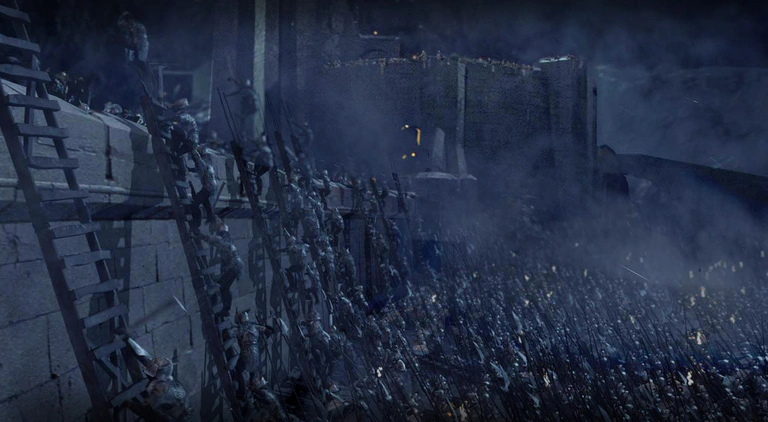
The first known usage of the Devilry of Saruman was at the Battle of the Hornburg, during which, the Deeping Wall and fortress gate were successfully breached. It was said that Saruman may have possibly have used this weapon again during the last march of the Ents, as a defense against the rampaging Ents. If the Devilry of Saruman was used then, it may have been what burnt and killed Beechbone and made the other Ents double their effort to tear down the place.
It is untold whether the Devilry of Saruman was a substance of one chemical, or of an assortment of them.
Speculation
It is possible that it might be most similar to Greek fire, an incendiary weapon historically used by the Byzantine Empire, which was a chemical substance that could be contained and used as explosive devices.
The Lord of the Rings (1978 animated film)
In Ralph Bakshi's The Lord of the Rings, the fire of Orthanc was Saruman sending fireballs from Orthanc to destroy the wall to turn the tide of the battle in his favor.
The Lord of the Rings: The Two Towers
In Peter Jackson's The Lord of the Rings: The Two Towers, the fire of Orthanc was portrayed as a blasting powder contained within great, heavy metal ball-like cases. Saruman's minions used these bombs at the Battle of the Hornburg to destroy the Deeping Wall. They were carried by two Uruk-hai and lit by a berserker, a rare, elite Orc-breed invented by the film-makers.

Sources
Adapted from the original article, under CC BY-SA 3.0.